For nearly 20 years, Groupe M6’s advertising sales house M6 Unlimited has analysed emerging societal signals to identify the trends shaping consumer behaviour, media and marketing.
The latest edition of its annual Tendances (or ‘trends’) study explores how uncertainty, AI and changing lifestyles are transforming audience expectations and brand connections. We spoke with Annabelle Guilly, Director of Research and CSR at M6 Unlimited, about the key findings from the 2026 edition.
1. What was the strongest shift that emerged from this year’s Trends study?
Annabelle: “The strongest signal to emerge is undoubtedly the shift towards a new consumer paradigm – one in which products and brand experiences are aligned with people’s emotions, going beyond purely rational and functional dimensions.
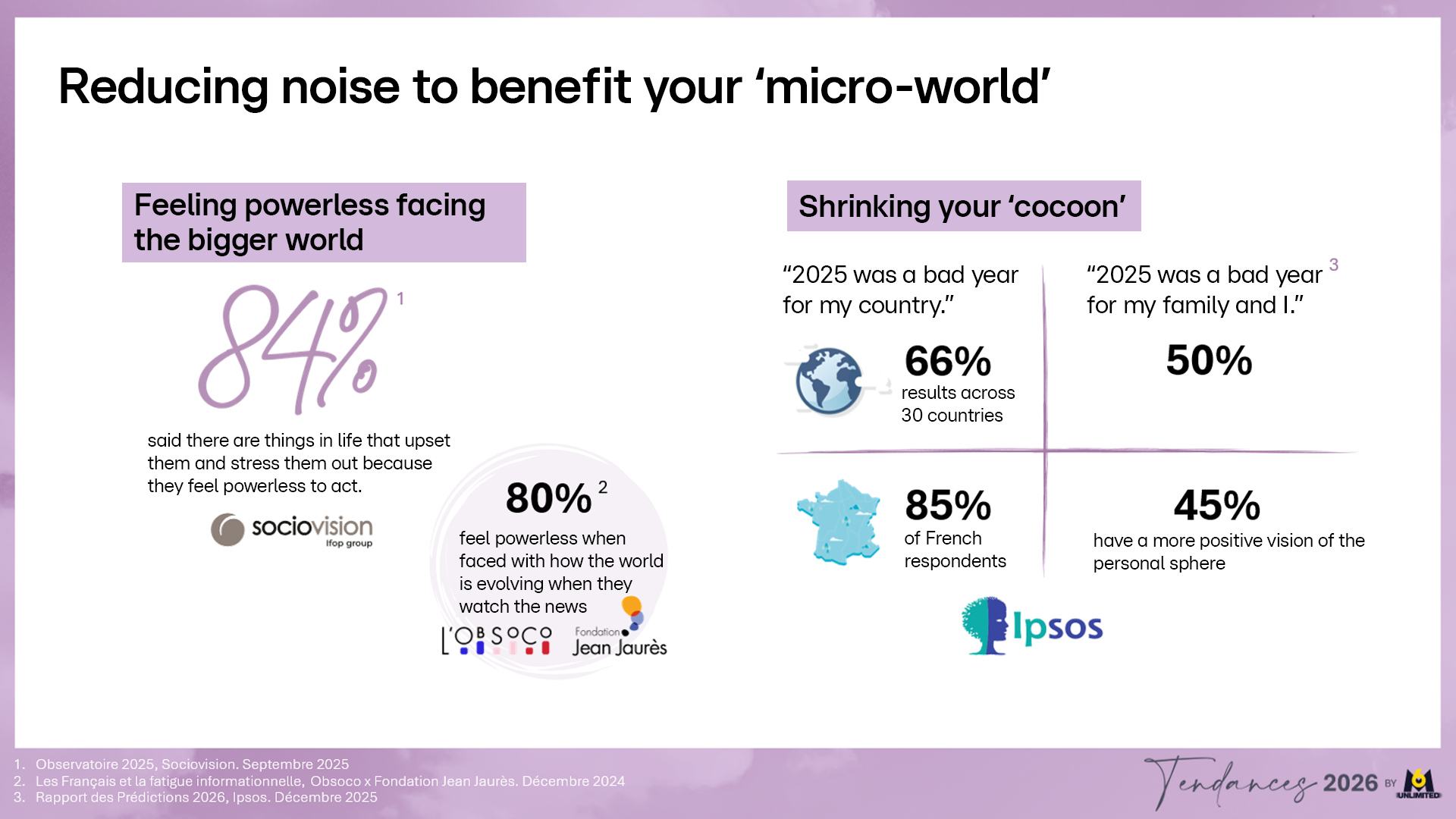
In a global context marked by fear, uncertainty and difficulty imagining a positive future, emotional intelligence is becoming a key skill to adapt to a world that lacks clear reference points. The more technology and AI become embedded in our societies, the stronger the need for “emotional reconnection” becomes.
This shift is particularly strategic because widespread pessimism is weakening consumers’ desire to spend. Brands therefore have a crucial role to play: creating optimism and building narratives around a desirable future in order to re-engage audiences.”
2. Why do you think this theme of human connection in an AI-driven world resonates so strongly today?
“This topic resonates for several converging reasons, including:
The paradox of hyperconnectivity and isolation: Our society is both technologically hyperconnected and deeply individualistic and polarised. The growing amount of single-person households and people lacking deep human relationships is fuelling what could be described as a ‘loneliness economy’. In this context, the need for authentic human connection becomes essential.
The risk of cognitive and emotional outsourcing: As AI increasingly encourages the delegation of cognitive and emotional tasks, strengthening what the WHO calls “life skills” – empathy, creativity and problem-solving – is becoming a necessity.
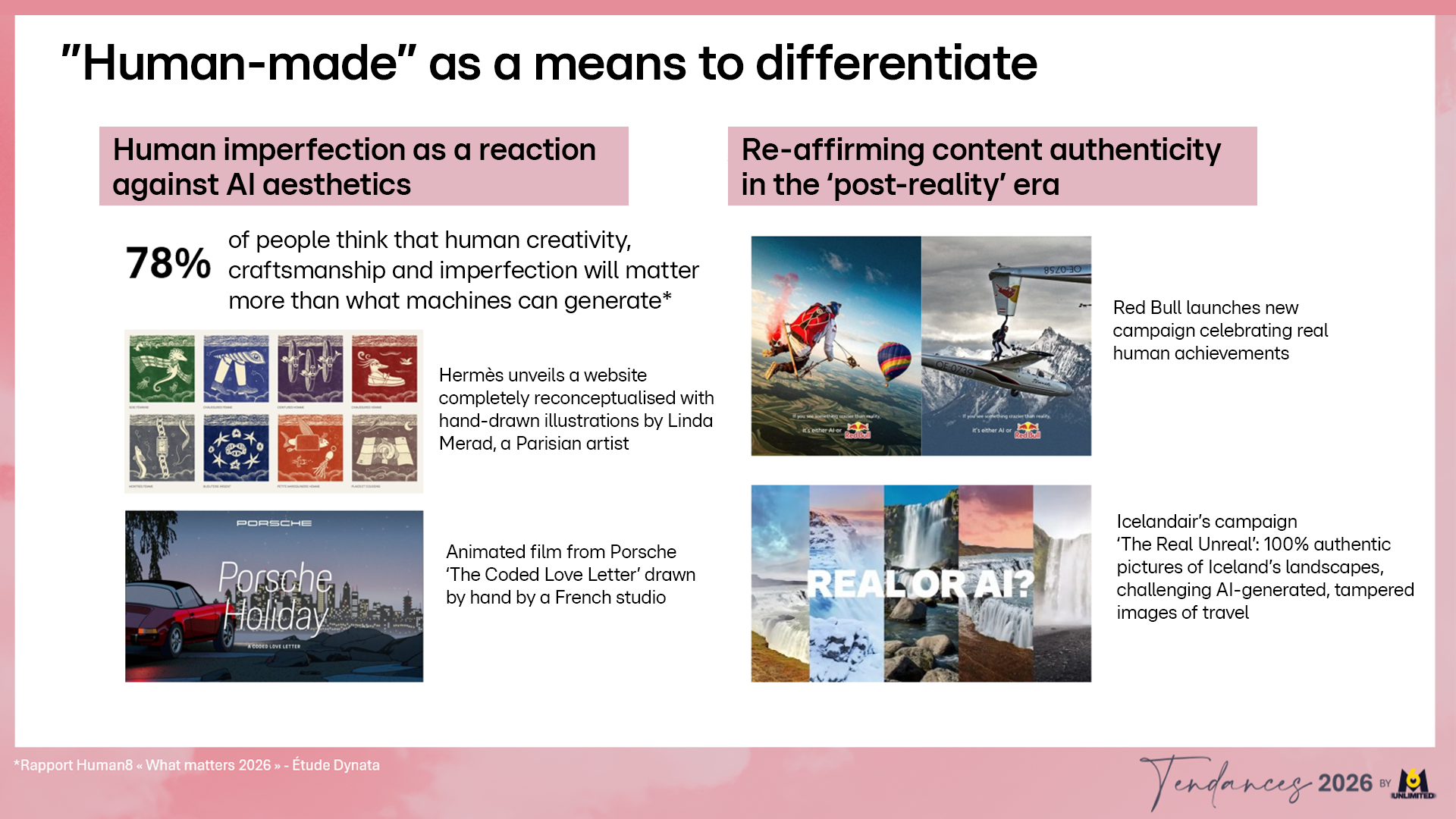
The renewed value of “made by humans” and need for emotional warmth: In the age of AI, brands are increasingly emphasising the authenticity of non-artificial content, while professions that cannot be performed by machines are being revalued. AI can manage rational and functional tasks, but it cannot replace human warmth, empathy and compassion. In an anxiety-inducing environment, people increasingly need the emotional dimension that only genuine human interaction can provide.”
3. What surprised you most during the research process this year?
“Several signals stood out to me, but perhaps the most surprising trend is that hyperconnected younger generations, particularly Gen Z, are actively seeking alternatives to screens. They are turning to analogue activities such as crosswords, puzzles, embroidery, knitting and crochet to escape digital noise and regain control over their attention. It represents a genuine reversal of expectations.
The rise of the “pet parent” phenomenon, where animals increasingly take on the status of children for young adults, reflects a profound transformation in family relationships shaped by changing demographic realities. This phenomenon reveals how needs for parenthood and emotional connection are evolving – and it is driving a rapidly growing market.
Nostalgia is no longer simply a retro trend, but is becoming a strategy for imagining the future more positively. The return of “pre-algorithmic” aesthetics and interest in vintage technologies suggests that idealising a more understandable past helps people cope with an increasingly uncertain future.
Finally, the rapid growth of ‘kidulting’ and the spread of playfulness across sectors show that people increasingly define themselves through cultural affinities rather than age groups. Play is becoming a necessary form of release in response to widespread anxiety, going far beyond simple entertainment.”
4. How do you think these trends could influence the way brands and media groups interact with audiences in the coming years?
“These trends are likely to reshape audience engagement strategies around three major themes:
Brands and media companies will need to move beyond transactional relationships to become genuine compassionate life partners. Compassion marketing, empathy and kindness will no longer be optional, but core brand services. Content and experiences will increasingly need to create strong emotional resonance.
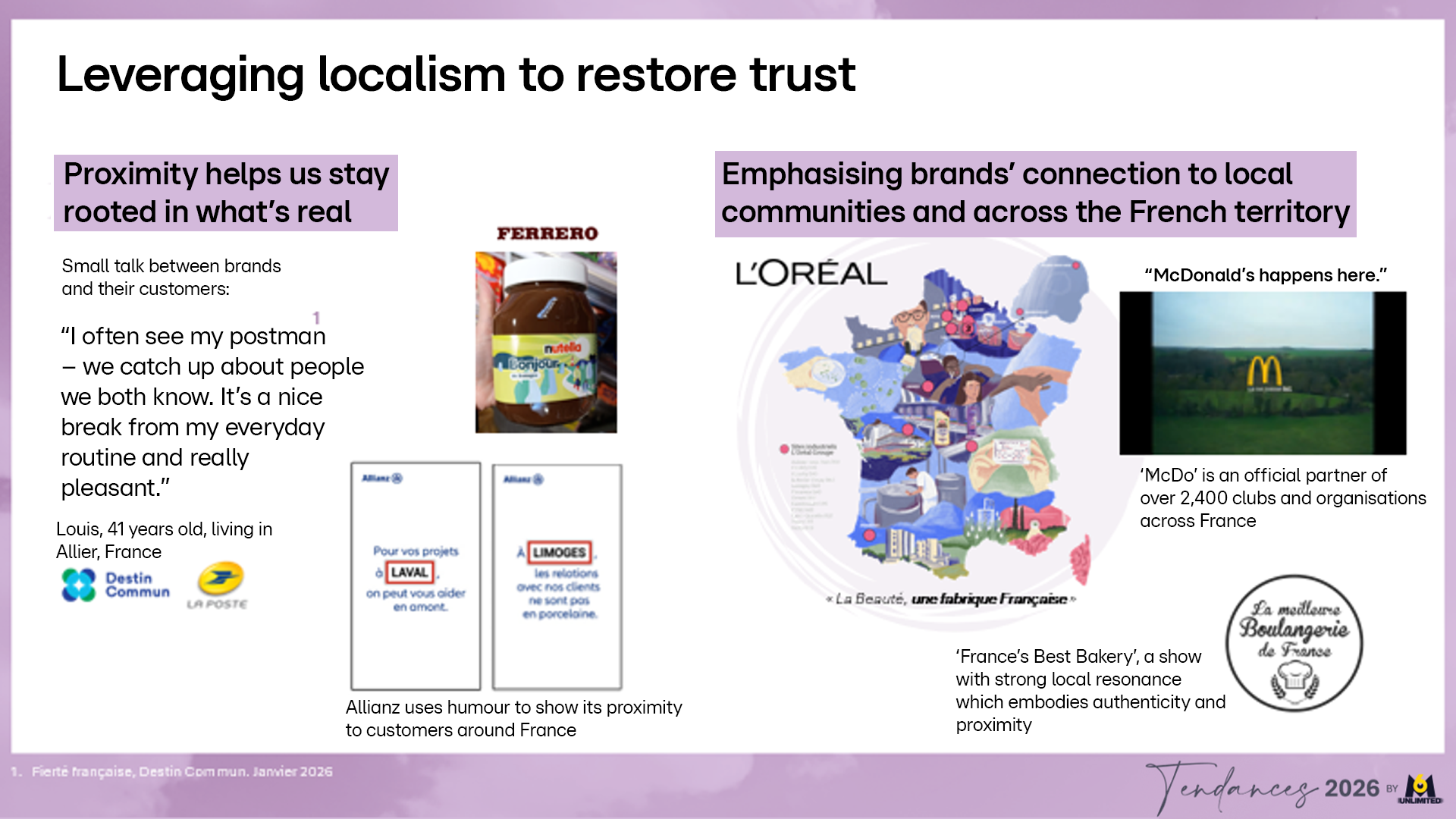
Brands and media organisations that can authentically immerse themselves in the realities of local communities and create personalised, locally driven experiences will gain a competitive advantage. Localism is becoming a source of trust and meaning. It is no longer simply a geographical concept, but a way to reconnect with local ecosystems and communities.
More broadly, amid the pressures of everyday life, brands and media can help people recognise the small moments of joy that shape their lives and help free them from negative emotions. These insights allow brands to integrate themselves more subtly into people’s lives.
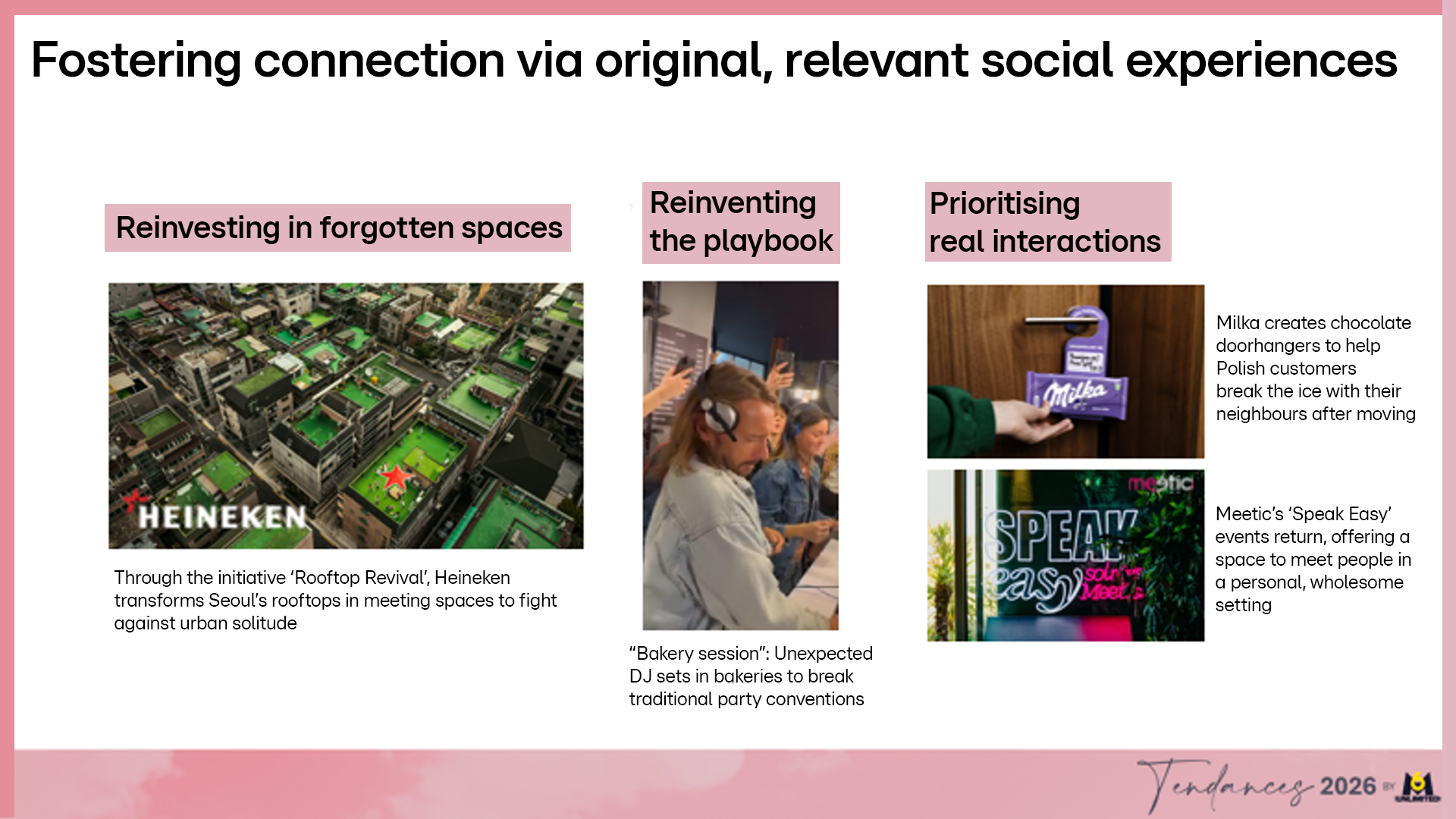
Finally, in response to digital saturation, media companies and brands must also become genuine experiential “third places”, creating tangible and authentic connections beyond screens. Immersive experiences will become essential for creating lasting memories and maintaining engagement in a fragmented attention economy.
To meet this demand for real sensations, brands are democratising access to outdoor activities by focusing on participation rather than expertise, or by transforming travel into physical and mental challenges.”
5. Which trend do you believe companies should pay the most attention to today?
“Adaptive resilience is a key trend for companies.
At a time when people’s ability to look optimistically towards the future is deeply disrupted, cultivating a resilient mindset and helping transform crises into opportunities is becoming a basic commercial imperative rather than simply a differentiating positioning strategy.
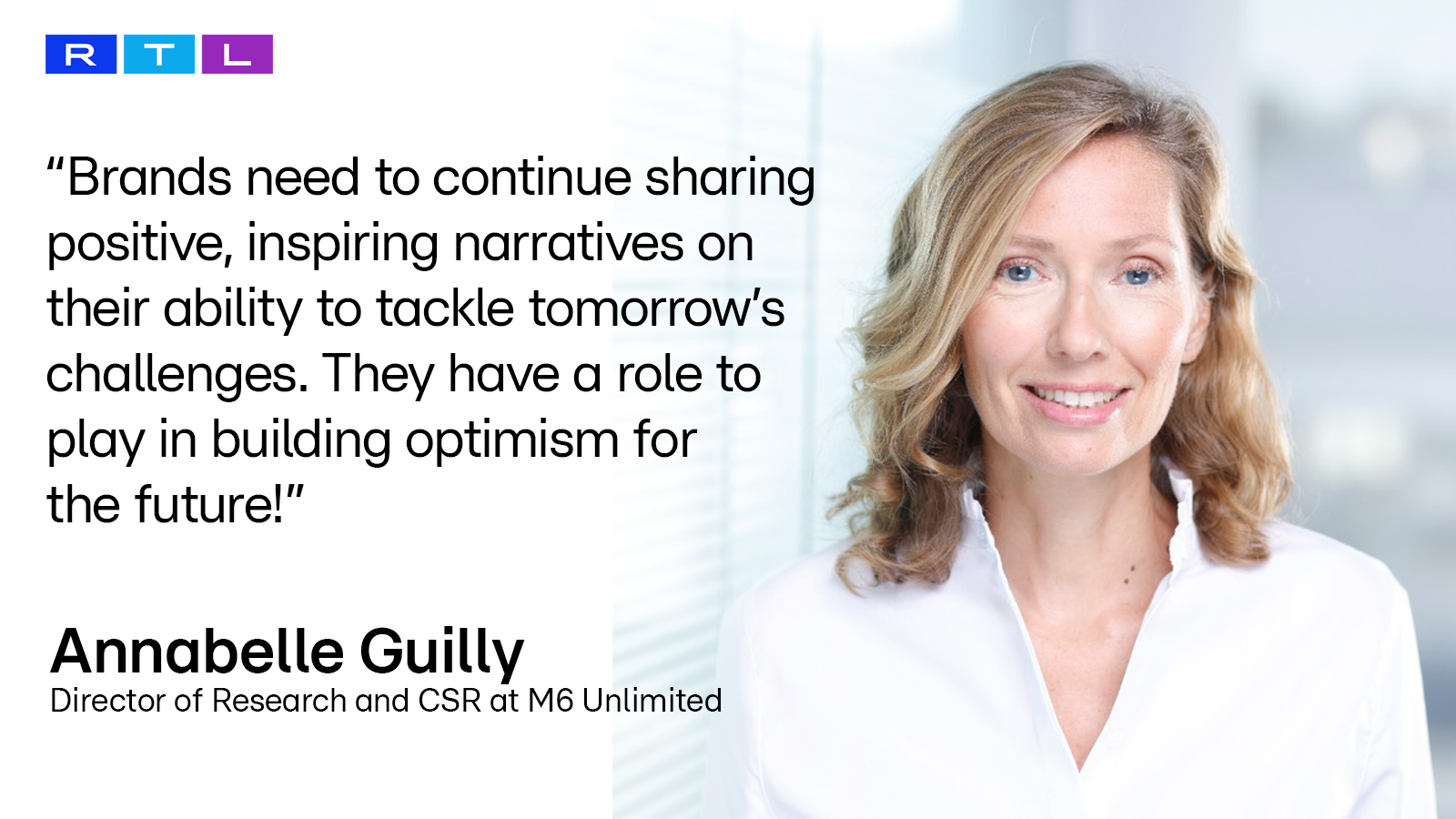
Innovation must once again become a driver of progress, and brands need to continue sharing positive and inspiring narratives about their ability to tackle tomorrow’s challenges.
Finally, AI should be positioned as a way to amplify human talent rather than replace it.”