Reducing RTL Group’s carbon footprint is not a one-time effort, but an ongoing commitment reflected in our daily decisions and the way we work – driving us toward our environmental targets. At Groupe M6, eco-production has become a concrete expression of that ambition, with teams across the business testing, learning and embedding more responsible ways of producing content.
| 🌿 What’s Green Heroes? |
| Sustainability at RTL Group is people in action. We all have a role to play, and together we’re building a greener, more responsible media future. With Green Heroes, we share stories from the people shaping RTL Group’s environmental journey. Stay tuned for more insights from across the Group! |
“From preparation and filming through to post-production, our technical and editorial teams are taking on this challenge every day – and the results are already tangible: since 2023, around twenty programmes produced or broadcast by Groupe M6 have received an eco-production label.”
🔹Eco-production – from strategy to set
Eco-production means reducing the carbon footprint of content across the entire production cycle – from preparation to filming and post-production. After two years of carbon assessments, eco-production was identified as a key lever within Groupe M6’s broader Corporate Sustainability Reporting (CSR) and carbon trajectory strategy – one of five major workstreams designed to drive measurable reductions.
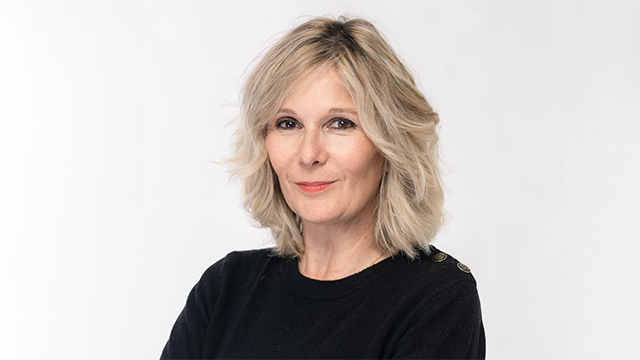
On paper, many eco-measures appear straightforward. Put into practice, they often require deep-rooted habits to change. For Muriel Ravard (left), Eco-Manager and Production Coordinator at Studio 89, one of the most sensitive shifts concerned catering: “Serving red meat only once a week was probably the most difficult habit to change.” Under current certification standards, red meat must be served no more than once every five meals.
Studio 89 chose to go further, maintaining a stricter once-a-week approach – even on productions with catering provided at both lunch and dinner.
Transport is another major lever. As Charlotte Thomas, Head of Production at SND Fictions, explains, it is often the largest source of emissions on a film: “Teams are still used to travelling in combustion engine vehicles, either out of habit or convenience. Moving to electric vehicles, public transport or car-sharing requires real support.”
Banning short-haul flights has proven particularly impactful. On the series Nouveau Jour, flights between Paris and Montpellier were prohibited and train travel made mandatory for the six-month shoot. Given that flying emits around 50 times more CO₂ than travelling by train, the impact on the final carbon footprint was significant.
🔹Small actions, tangible impact
Some of the most effective measures are also the simplest. For Muriel, switching to rechargeable batteries stands out: “It’s a simple action, but it reduces waste very concretely and shows that eco-production is based on accessible gestures for everyone.”
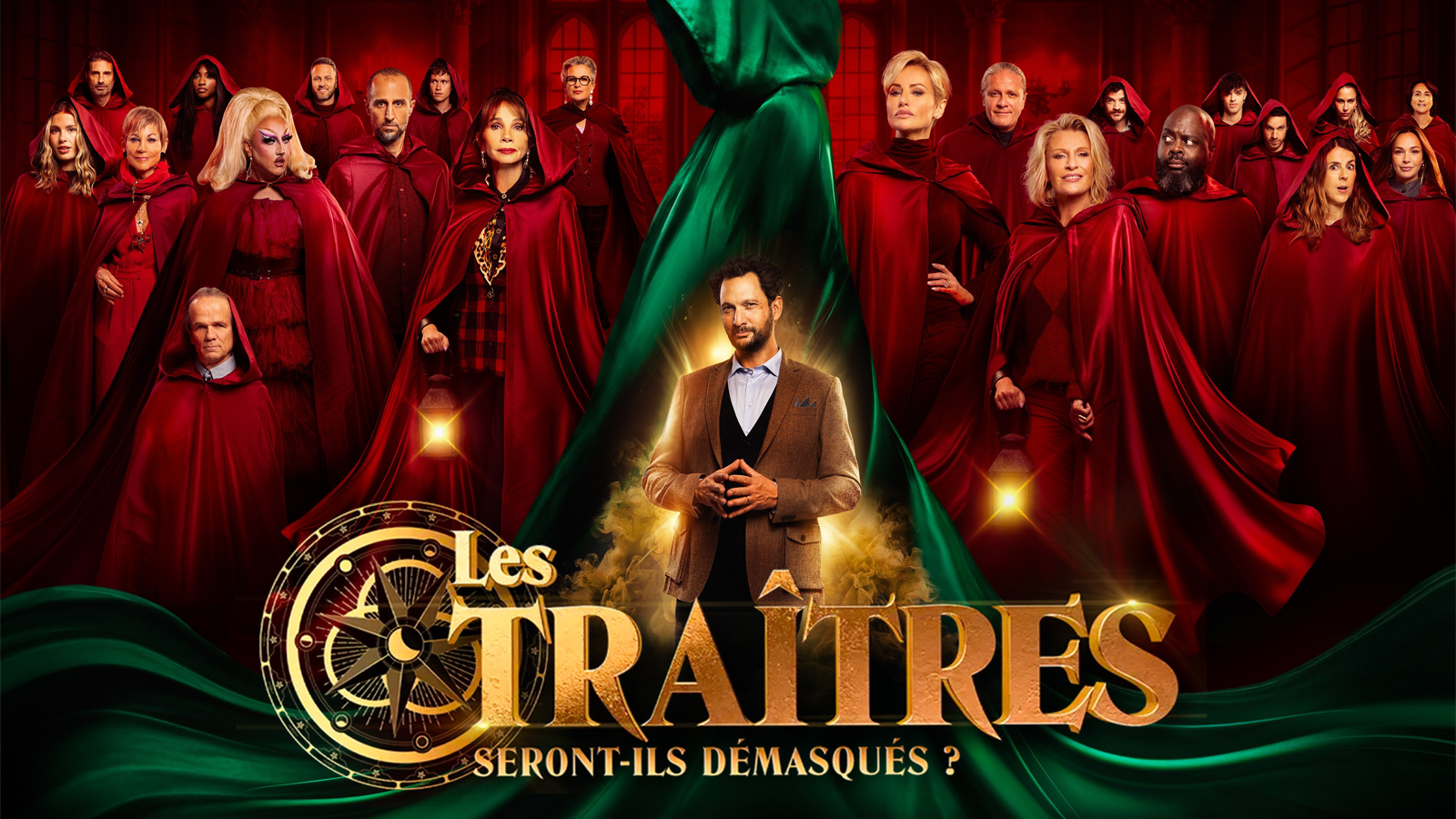
On one season of Les Traîtres, 250 rechargeable batteries were used – compared with 600 disposable batteries on earlier, non-eco-produced seasons.
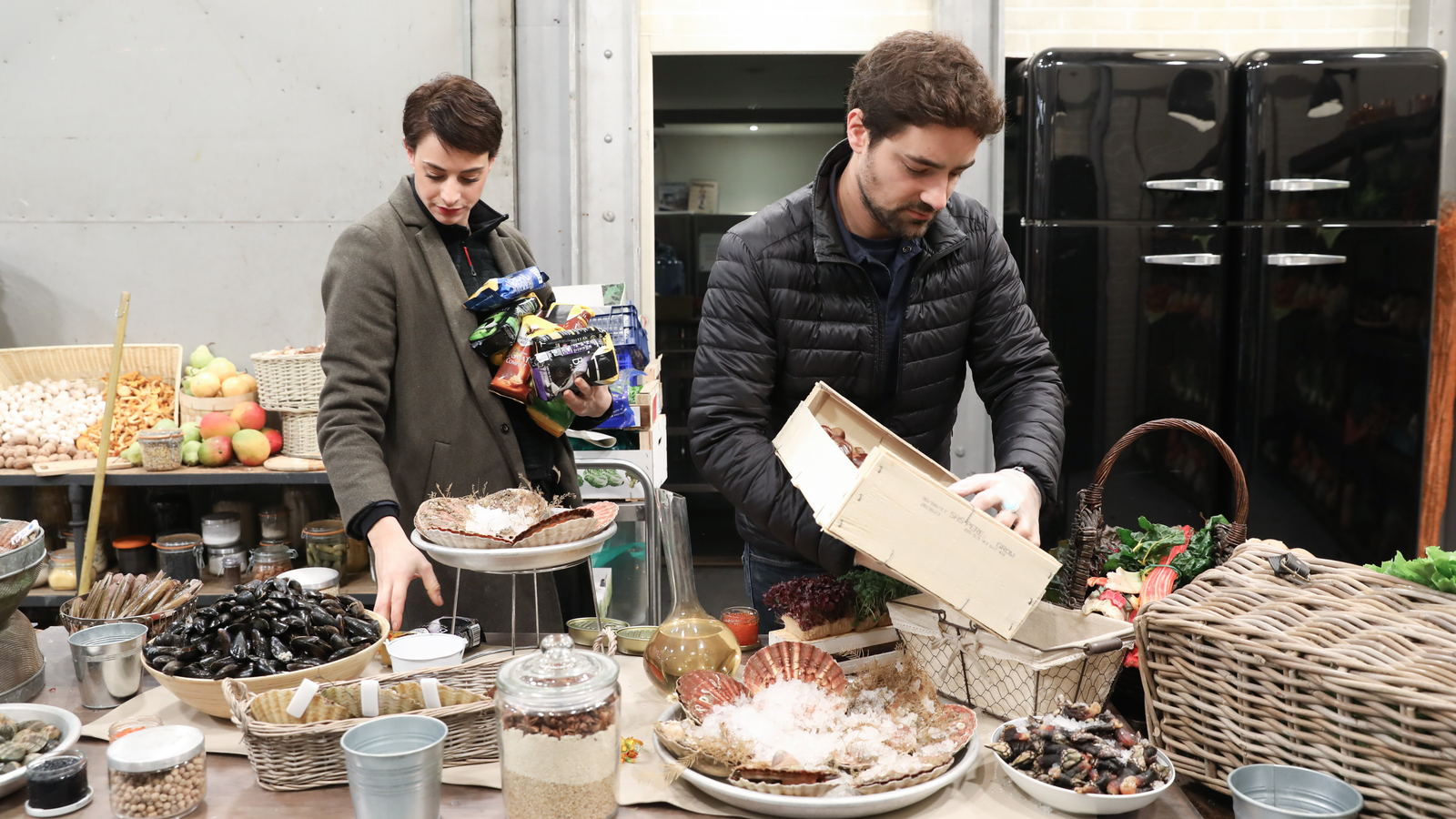
Catering has also delivered measurable benefits. A single meal containing red meat has the carbon equivalent of 14 vegetarian meals. Introducing a fully vegetarian meal once a week – and offering daily vegetarian alternatives – has been widely accepted, particularly by younger crews who are increasingly sensitive to sustainability issues. The key was quality, seasonal menus and genuinely appealing options.
The significant reduction – and in some cases elimination – of single-use plastic packaging on set has also led to a sharp drop in plastic waste volumes.

🔹Top Chef – a large-scale test case
Producing a flagship entertainment show sustainably is complex – which is precisely why Top Chef became such a powerful test case.
Eco-production on Top Chef involves editorial teams, production crews and partners working collectively. Measures included:
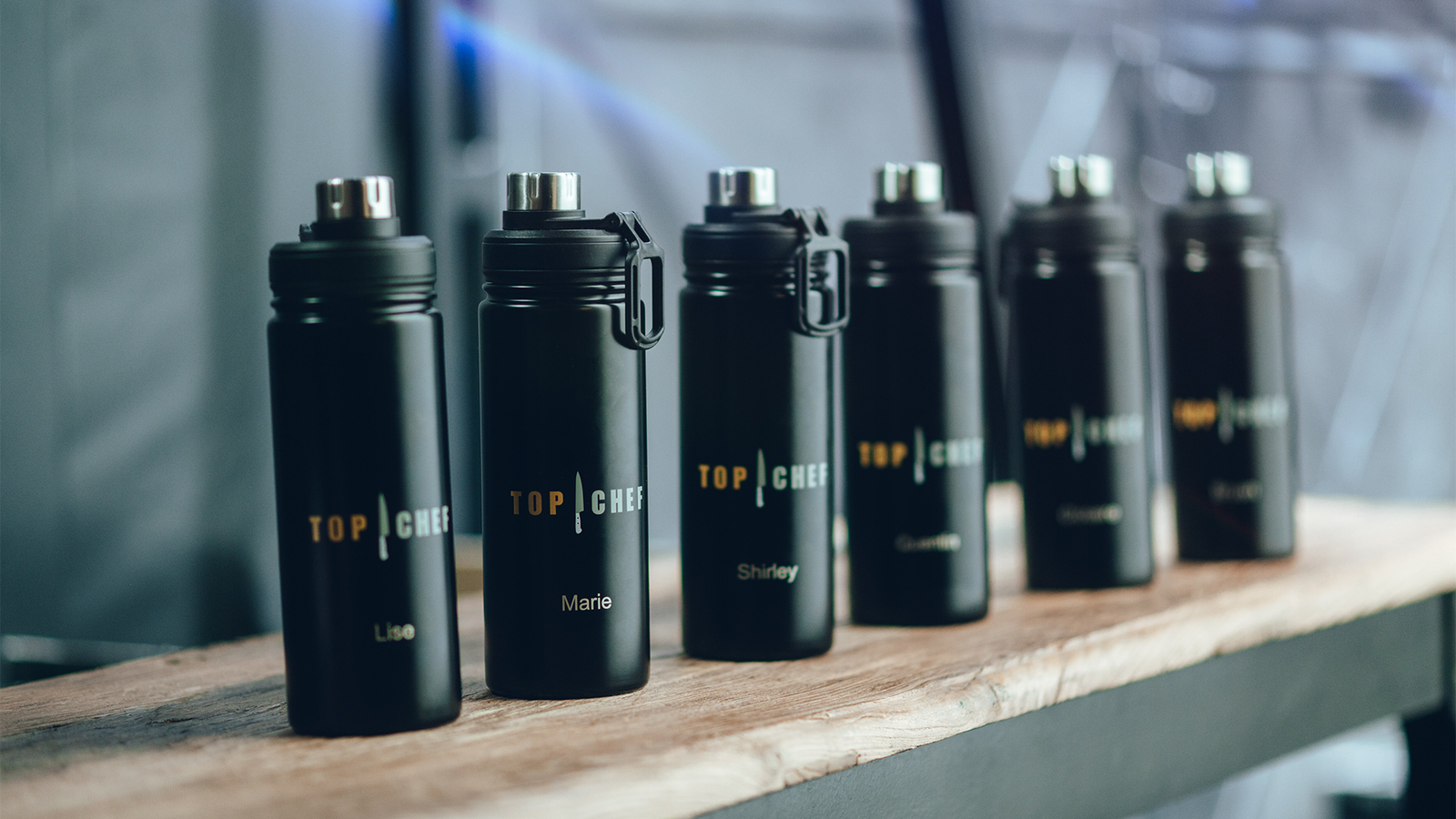
- reducing single-use plastics by distributing reusable bottles and installing water fountains
- sorting waste and rethinking catering
- prioritising green electricity, LED lighting and energy-efficient equipment
- favouring train travel over flights
- working with eco-responsible suppliers
The programme became France’s first entertainment show to receive certification from Ecoprod – the leading French eco-production label promoting sustainable practices across the audiovisual industry. Top Chef achieved a two-star label in an important milestone, with ambitions already set higher.
🔹Surprises – and strong engagement
Interestingly, resistance has not always been where expected. “I thought teams might be reluctant,” says Muriel. “In fact, the approach was very well received – almost as if it had been long awaited.”
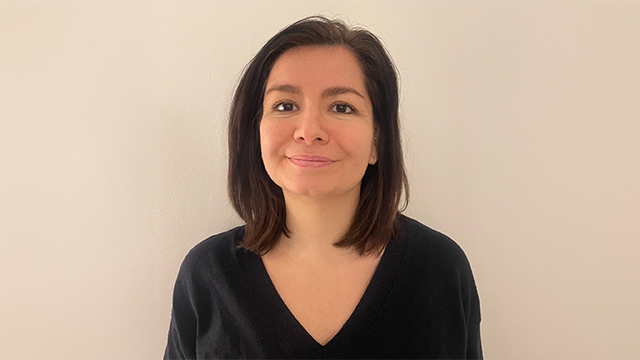
Charlotte (pictured left) highlights the diversity of reactions from one production to another – from highly committed teams to more skeptical ones. Even something as seemingly simple as waste sorting can remain challenging on certain sets, despite being routine in everyday life. The lesson is clear: communication, pedagogy and anticipation are essential.
“Eco-production relies above all on dialogue,” Charlotte explains. “You need to explain the challenges, listen to constraints and build solutions together. And having a clearly identified, dedicated eco-manager makes a real difference.”
🔹Scaling up – a collective journey
Encouraged by early successes, eco-production is now expanding:
- Studio 89 is applying these learnings to further productions
- C Productions has since labeled another program 'Call for Witnesses' and is working on the labeling of another program
- News and editorial teams are integrating eco-principles into their workflows
- In cinema and fiction, M6 and SND are working with partners to reduce the footprint of large-scale productions
From a budgetary perspective, eco-production represents around 1% of a film’s total budget – covering roles such as eco-managers, certification and adapted waste systems. These costs are often offset by efficiencies, such as local filming, reuse of sets and costumes, and more sustainable mobility choices.
🔹Turning ambition into reality
The key takeaway is both simple and powerful: eco-production works when it is collective, pragmatic and grounded in real-life constraints.
When teams understand the purpose behind decisions – and when the atmosphere remains constructive and positive – sustainability stops being a constraint and becomes a shared objective.
At Groupe M6, eco-production is still a journey. But it already demonstrates how concrete, measurable actions – driven by committed teams – turn environmental ambition into everyday reality.
🔹On now: M6 Green Week, happening 2-8 March, 2026
From an entire week, Groupe M6 mobilises all its channels – TV, radio and digital – for the 7th edition of Green Week, a unique editorial initiative dedicated to raising environmental awareness. In 2025, the event reached 25 million people across Groupe M6’s channels.
“Green Week 2026 is not just an editorial highlight; it is the showcase of a long-term commitment that, behind the scenes, mobilises all our talent – from our channels to our partners, not forgetting our employees – with a shared mission: to harness our ability to bring people together in support of the ecological transition,” says Guillaume Charles.