For the teams at RTL Luxembourg, covering the High Fens wildfires meant responding to a fast-moving story with an impact that extended far beyond the fire itself. Reporters travelled to the affected area, where they were able to witness the work of firefighters at exceptionally close range, while colleagues across the newsrooms shared information, contacts and footage to keep audiences informed.
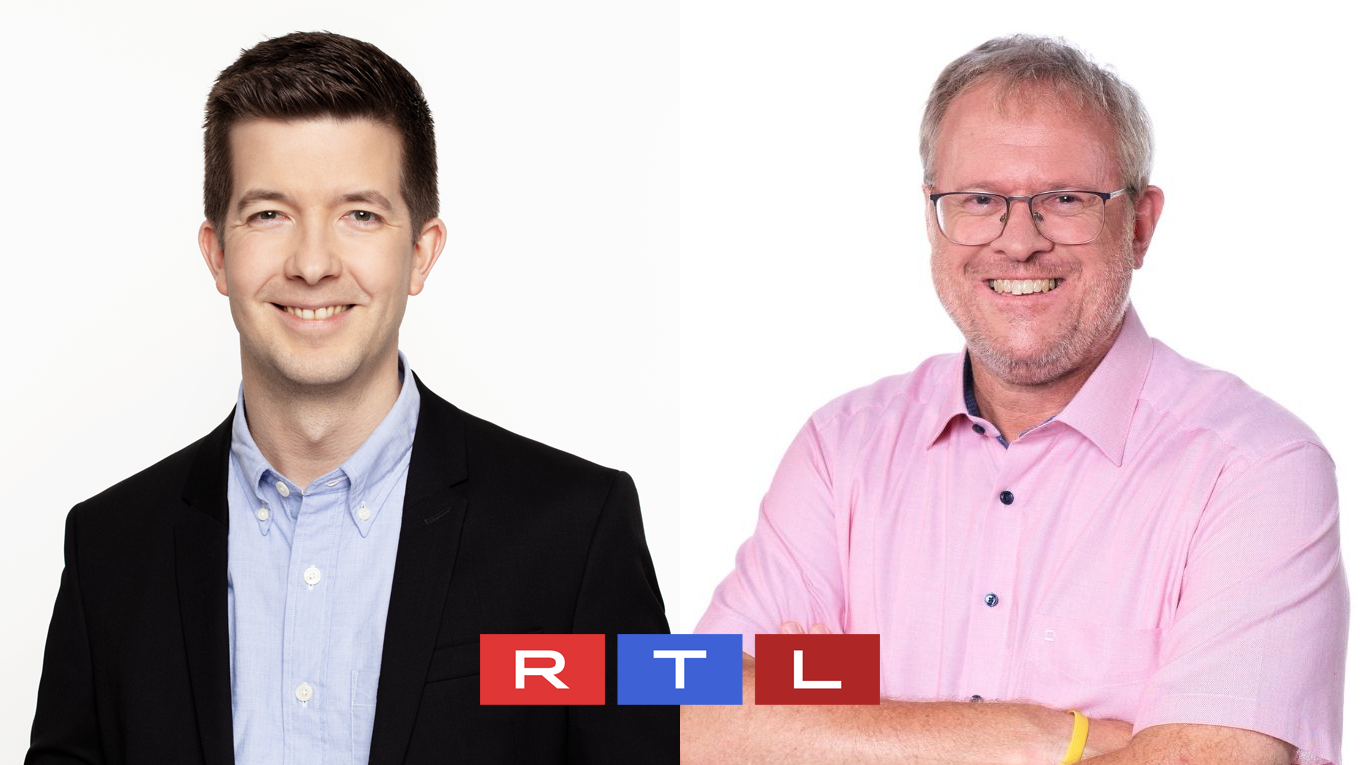
“A major breaking-news story rarely fits into just one format or one language,” says Jeff Spielmann, Head of Editorial Operations at RTL Luxembourg. The collaboration ultimately extended beyond Luxembourg, with RTL Luxembourg and RTL Radio in France joining forces for an exclusive interview with Belgian Interior Minister Bernard Quintin. As journalist Christophe Hochard explained to the minister’s spokesperson: “We are RTL – we are part of the same family.”
Here is the the full interview:
1. When did the team first realise the High Fens wildfire was a story that required reporters on the ground?
Jeff Spielmann – Head of Editorial Operations at RTL Luxembourg: The situation developed quite quickly. At first, like with any breaking news story, we were following the information coming from the authorities and local sources. But as the scale of the wildfire became clearer, it was obvious that this was more than a story we could cover from the newsroom.
The High Fens are geographically very close to Luxembourg, and the wildfire was also having a direct impact on Luxembourg, with the smoke plume reaching the country. So, there was little doubt that this was a story we needed to cover on the ground and follow closely for our audience.
2. What was it like reporting so close to the affected area, and what were the main challenges the team faced on the ground?
Christophe Hochard – Journalist at RTL Luxembourg: Seeing the images of a disaster on television is one thing. But witnessing the scale of the devastation with your own eyes gives it a completely different dimension. It makes you realise even more just how severe the impact of this natural disaster is on the environment. There are really no words to describe what we experienced.
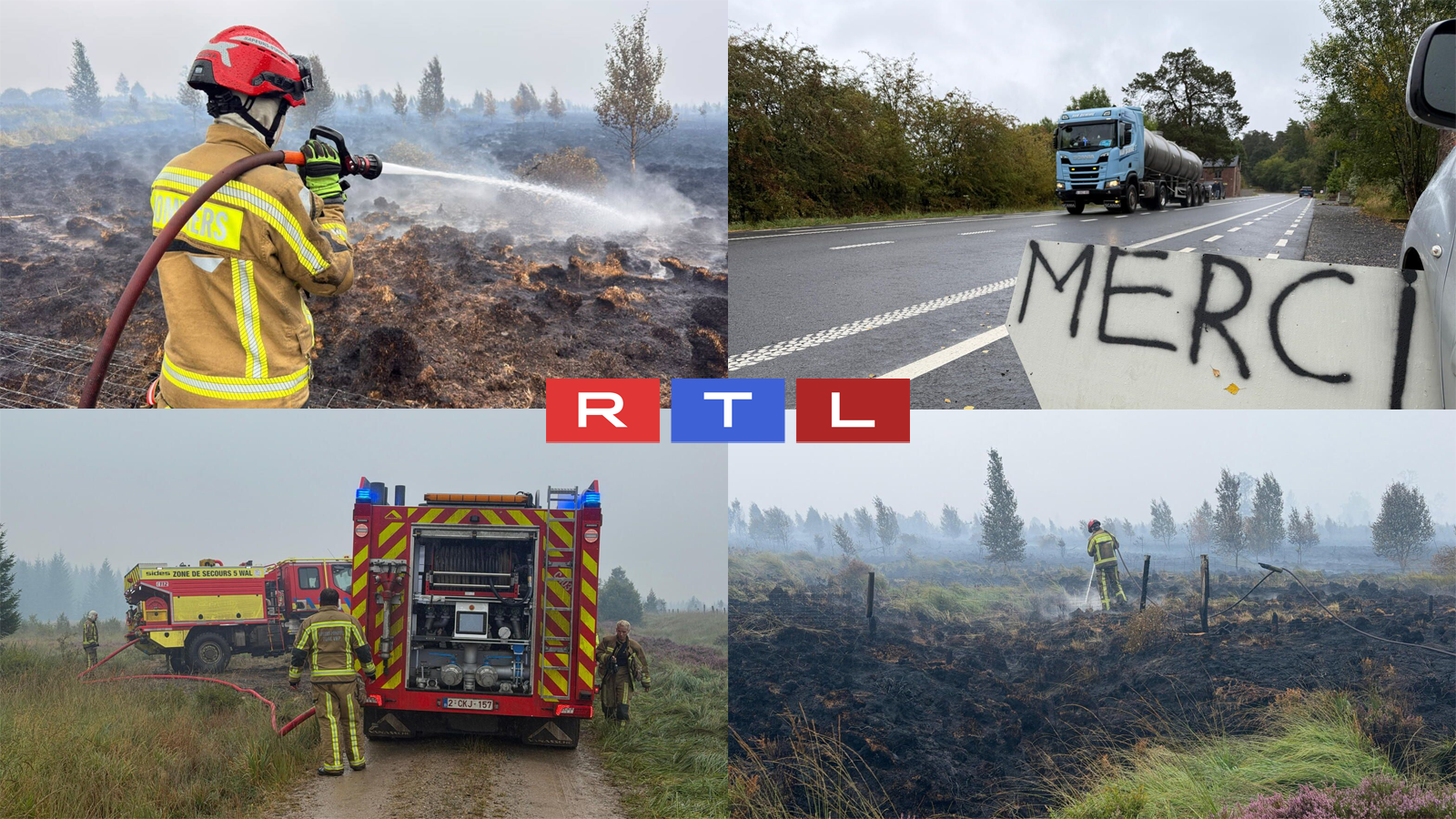
On Sunday, we also had the great opportunity to be taken close to the fire by the firefighters. We were the only TV crew that was able to get that close with a camera. Seeing the firefighters trying to get the fire under control and save whatever could still be saved was extremely powerful emotionally. For them, it was a race against time.
Feeling the smoke from the fire in our noses and eyes was also a very intense experience.
I would say there were two major challenges for us. The first was finding a way to convey what we were experiencing through our images – to help people watching at home understand what they were actually seeing, including the devastating impact on the fauna and flora. We also wanted to show the conditions under which the people on the ground were working to get this catastrophe under control.
The second challenge was a very practical one. The disaster was taking place in a very remote area, so sending our footage back to Luxembourg and doing our live broadcasts in the evening was difficult. In many places, there was very little or even no network coverage at all.
3. How do you balance the need to report quickly with keeping journalists safe when covering a potentially dangerous situation like this?
Jeff: Safety always comes first. In a situation such as a wildfire, journalists cannot simply go wherever the story takes them. We rely on the instructions of the authorities and constantly assess the situation as it develops.
At the same time, breaking news requires us to be responsive. The challenge is therefore to find the right balance: getting as close as possible to the story and providing first-hand reporting, while never putting our journalists or camera crews at unnecessary risk.
In this case, the cooperation with the local authorities was exemplary. Our reporters and camera crews on the ground were very well supported and kept informed about the situation and any potential risks. This close cooperation made it possible for us to cover the story from the ground while keeping the safety of our teams as the top priority.
4. How did the different RTL Lëtzebuerg and RTL Today teams work together as the story developed?
Jeff: The coverage was a good example of how our different editorial teams can complement each other. RTL Lëtzebuerg and RTL Today were following the same developing story, but each team was able to contribute its own perspective, language and audience focus.
Information, contacts, pictures and developments could be shared between the teams, while each newsroom remained responsible for producing content that was relevant to its own audience.
5. What did this coverage show you about the advantages of having journalists, platforms and different language teams working closely together?
Jeff: I think it showed the real value of having different teams working under the same roof. A major breaking-news story rarely fits into just one format or one language. Some audiences want immediate updates, others want more context, and the way a story is presented can differ from one platform to another.
By working closely together, our teams can share information and resources while adapting the coverage to the needs of their respective audiences. Our French-language portal, RTL Infos, also played a crucial role in reaching French-speaking audiences. This was particularly important given that the fires occurred in Belgium, where French is one of the main languages, and which, as our neighbouring country, is naturally a key audience for us. The story therefore had a significant reach across the border as well. In a small country like Luxembourg, this is particularly valuable: we can combine our strengths without losing the specific identity of each platform.
6. Was there anything about the process behind this story that audiences might be surprised to learn?
Christophe: There was a very good cooperation between the authorities on the ground and the media. A large number of different media outlets were there, including international broadcasters such as RTL Deutschland, ZDF, ARD and TF1, as well as Belgian media such as RTL TVI, VTM and RTBF.
There was also some great cooperation between RTL Lëtzebuerg and our colleagues from RTL Radio in Paris. As international media, we were given the opportunity to conduct an exclusive interview with the Belgian Interior Minister, Bernard Quintin.
The minister’s spokesperson was very happy that we, as RTL, were willing to combine our efforts and ask our questions together. I explained it to her by saying: “We are RTL – we are part of the same family.” That was the reason why RTL Lëtzebuerg and RTL Radio (France) were able to do the interview together.
The minister appreciated this cooperation, especially because he had been in very high demand that day and was receiving requests from many different media outlets.
Oliver Fahlbusch
Executive Vice President Communications & Investor Relations, RTL Group
+352 / 24 86 5200
Irina Mettner-Isfort
Vice President Media & Investor Relations
RTL Group
+49 221 456 56410